|
David A. Wheeler
My professional interests focus on
computer security (especially in
developing
secure software),
Free/libre/open source software (FLOSS or OSS),
improving software development practices,
and open standards.
I am the Director of Open Source Supply Chain Security at the
Linux Foundation (LF) and an
adjunct professor in the George Mason University (GMU)
Department of Computer Science.
|
| Education/Training | Awards/Certificates |
|---|
- PhD in Information Technology, George Mason University (GMU), 2009 (granted 2010)
- Certificate for Information System Security, GMU, 2000.
- Design and Analysis of Distributed Protocols, Summer Session, Massachusetts Institute of Technology (MIT), 1994
- MS in Computer Science, GMU, 1993 (granted 1994)
- Certificate for Software Engineering, GMU, 1993 (granted 1994)
- Software Capability Evaluation (SCE) Training, Software Engineering Institute (SEI), 1993
- BS in Electronics Engineering, GMU, 1987 (granted 1988); graduation with distinction
|
|
Published books
Public/Published articles
Most of my written work is not publicly available
(e.g., I've done some work in artificial intelligence and machine learning,
as well as more about secure software, that I do not have
the right to post).
However, if I am allowed to make it publicly available, I try to host it on
my website, or at least include
a reference to it from my website.
Here are some of my publicly-available works, some professional, and
some fun:
- Security
- Secure Programming HOWTO (information on creating secure software)
- A Sample Security Assurance Case Pattern by David A. Wheeler, December 2018, IDA P-9278
- State-of-the-Art Resources (SOAR) for Software Vulnerability Detection, Test, and Evaluation 2016 by David A. Wheeler and Amy Henninger, November 2016, IDA document P-8005 (see its
Appendix E).
- Open Source Software Projects Needing Security Investments by David A. Wheeler and Samir Khakimov, IDA D-5459, 2015-06-19
- Securely Using Software Assurance (SwA) Tools in the Software DevelopmentEnvironment by David A. Wheeler and Daniel J. Reddy, July 2018, IDA Paper P-9166
- My developerWorks column "Secure Programmer"
- "Countering Trusting Trust through Diverse Double-Compiling (DDC)",
Proceedings of the Twenty-First Annual Computer
Security Applications Conference (ACSAC). This is an academic paper
on how to counter the "Trusting Trust" attack, the attack
everyone assumed was essentially uncounterable.
- Fully Countering Trusting Trust through Diverse Double-Compiling (DDC), my PhD dissertation on the same topic
- Software Configuration Management (SCM) Security
-
Techniques for Cyber Attack Attribution
by David A. Wheeler (Oct 2003); this
summarizes various techniques to perform attribution
(aka traceback or source tracking) on networks, esp. TCP/IP networks.
On 2010-06-15 discussed this work as an expert witness to the
U.S. House of Representatives, Committee on Science & Technology,
Subcommittee on Technology & Innovation.
- Co-author of
Engineering for System Assurance (NDIA)
- Open Source Software/Free Software (OSS/FS)
- Mathematical Recreations
- Other
Interviews
The insatiably curious can see some
interviews of me here:
David A. Wheeler on the Current State of Application Security (Trusted Software Alliance);
"A visit with the Doctor" on The Dave and Gunnar Show, 2014-05-20;
"US government accelerating development and release of open source" with Mark Bohannon, Opensource.com, 2014-04-24;
"5 Questions with David A. Wheeler" by Melanie Chernoff,
Opensource.com, 2012-07-17;
"Linux Security Interview with David A. Wheeler" (LinuxSecurity.com);
"Under the Brim Interview with David A. Wheeler" ("Under the Brim" August 2002)
(here's Red Hat's copy, though with a copy/paste error about "The Economist" and "The Nation" which
I didn't say);
"How useful are 'proprietary vs. open source' TCO studies?"
by NewsForge (on proprietary vs. OSS/FS TCO studies);
and
"David A. Wheeler's interview" for
FOSDEM 2002.
Mentions
I've been mentioned way too many times in various news articles and such
to even try to give a complete listing.
Here is a sampler.
Presentations and teaching
See my
page on presentations
if you want to learn about my past or future public presentations.
I teach part-time at George Mason University, where I'm an
adjunct professor in their
Department of Computer Science;
if you need to email me in that capacity, use the GMU
address
dwheele4 (at) gmu (dot) edu instead.
Hobbies/Personal Info
My hobbies include tabletop role-playing games (mostly D&D),
chess, singing (bass), and
reading (especially science fiction and fact).
I also play the piano, guitar, tuba, and baritone horn, though
never at the same time.
I live in Northern Virginia, near Washington, DC.
I'm a Christian;
more information about Christianity is available.
Other Stuff
In the mid-1980s I was the maintainer of
Scepter of Goth.
This was the first commercial multiplayer Role-Playing Game (RPG)
in the United States; I think it was the first in the world,
though that depends on how you date the
commercialization of Scepter and of Bartle's MUD / British Legends.
This was before Internet access was widespread; Scepter
was a franchise operation, with each franchise running in
a local area (customers would dial into a local franchise).
Scepter has influenced many later systems, including many of the
multi-million-dollar Massively Multiplayer Online Role-Playing Game
(MMORPGs) of today.
I haven't been in that business for many years, but people still remember
me for that.
For many years I worked at the Institute for Defense Analyses (IDA);
I started as a consultant in 1987, and became a research staff member (RSM) not
long afterwards. I ended my full-time employment at IDA on 2020-03-31,
and began working at The Linux Foundation instead.
Why the middle initial ("A.")?
I always use my middle initial in anything written
(including information on the web), because there are a number of
other David Wheelers.
For example,
David John Wheeler (now deceased) was the creator of the
Tiny Encryption Algorithm (TEA) (a somewhat popular encryption algorithm
unencumbered by patents), and is credited with
co-inventing the subroutine.
David E. Wheeler is President of Kineticode,
a content management and software development consulting company
based in Portland, and is the
lead developer for Bricolage (an OSS/FS content management system);
you can contact him using the address "david" at justatheory dot com.
Note: the Associated Press (AP) Style guide recommends that you include
my middle initial in this case.
The
AP Style guide says to
"use middle initials in full name reference only
if the person uses it regularly" - and I
do use my middle initial regularly.
Other sites
You can find me on other sites such as
LinkedIn
(dr-david-a-wheeler; was david-a-wheeler-27798688),
GitHub (david-a-wheeler),
GitLab (david-a-wheeler),
ORCID.org (David A. Wheeler 0009-0007-7299-4007),
Twitter (drdavidawheeler),
Mastodon infosec.exchange (davidawheeler).
Hacker News from Y Combinator (dwheeler),
Discord davidawheeler,
and
Youtube
(drdavidawheeler).
Biographies
My typical bio, if you need it...
Dr. David A. Wheeler is an expert on
developing secure software and on open source software.
His works include
Software Inspection: An Industry Best Practice,
Ada 95: The Lovelace Tutorial,
Secure Programming HOWTO,
Fully Countering Trusting Trust through Diverse Double-Compiling (DDC),
Why Open Source Software / Free Software (OSS/FS)? Look at the Numbers!,
and
How to Evaluate OSS/FS Programs.
Here's a longer OSS-specific biography:
Dr. David A. Wheeler is an expert on open source software (OSS)
and on developing secure software.
His works on developing secure software include
"Secure Programming HOWTO",
the
Open Source Security Foundation (OpenSSF)
Secure Software Development Fundamentals Courses,
and
"Fully Countering Trusting Trust through Diverse Double-Compiling (DDC)".
He also helped develop the 2009 U.S. Department of Defense (DoD) policy on OSS.
Other works of his include
"Software Inspection: An Industry Best Practice" and
"Ada 95: The Lovelace Tutorial".
David A. Wheeler is the Director of Open Source Supply Chain Security
at the Linux Foundation and teaches
a graduate course in developing secure software
at George Mason University (GMU).
Dr. Wheeler has a PhD in Information Technology,
a Master's in Computer Science, a certificate in Information Security,
a certificate in Software Engineering, and
a B.S. in Electronics Engineering, all from George Mason University (GMU).
He is a
Certified Information Systems Security Professional (CISSP)
and a Senior Member of the Institute of Electrical and Electronics Engineers
(IEEE).
He lives in Northern Virginia.
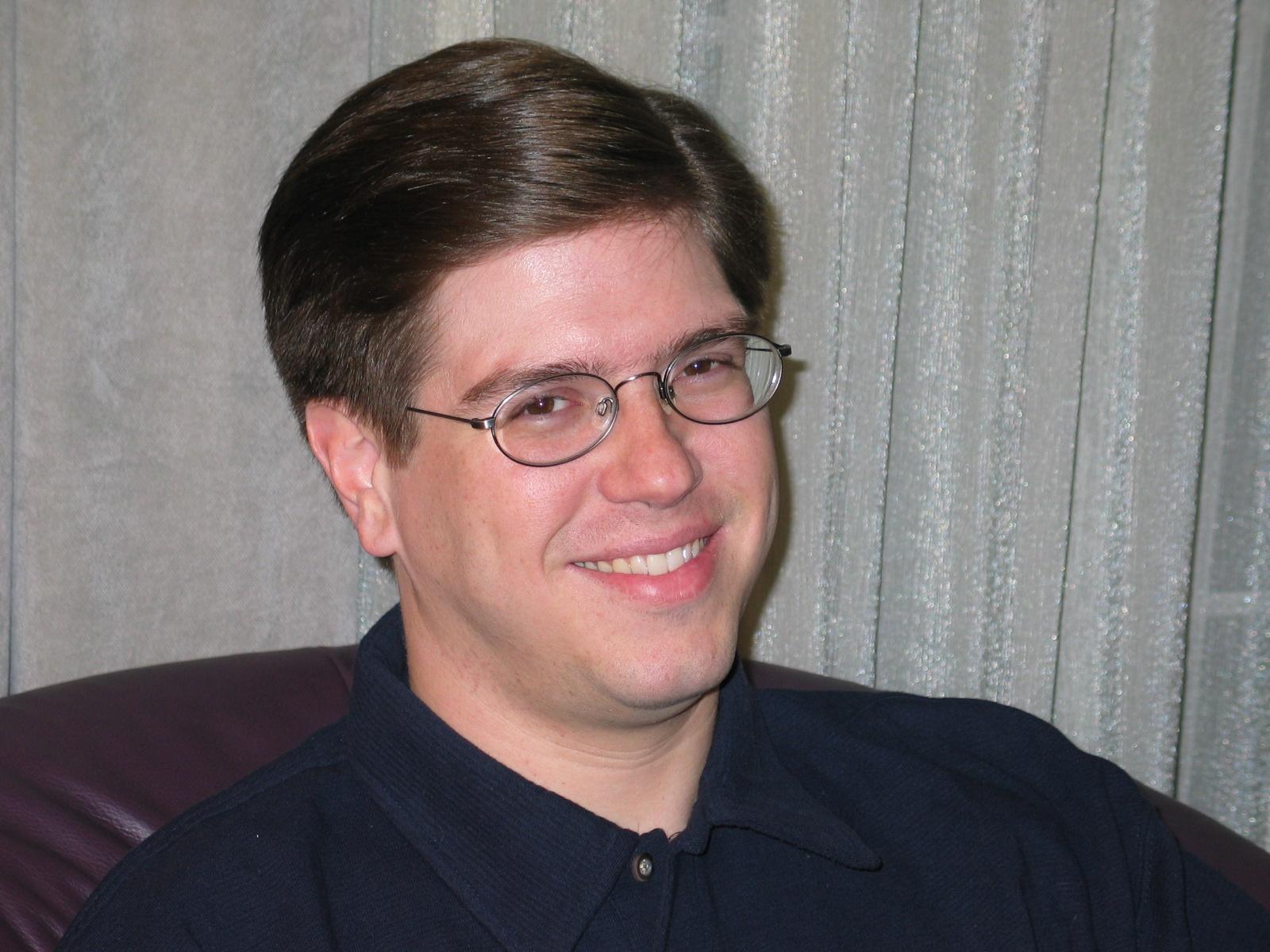
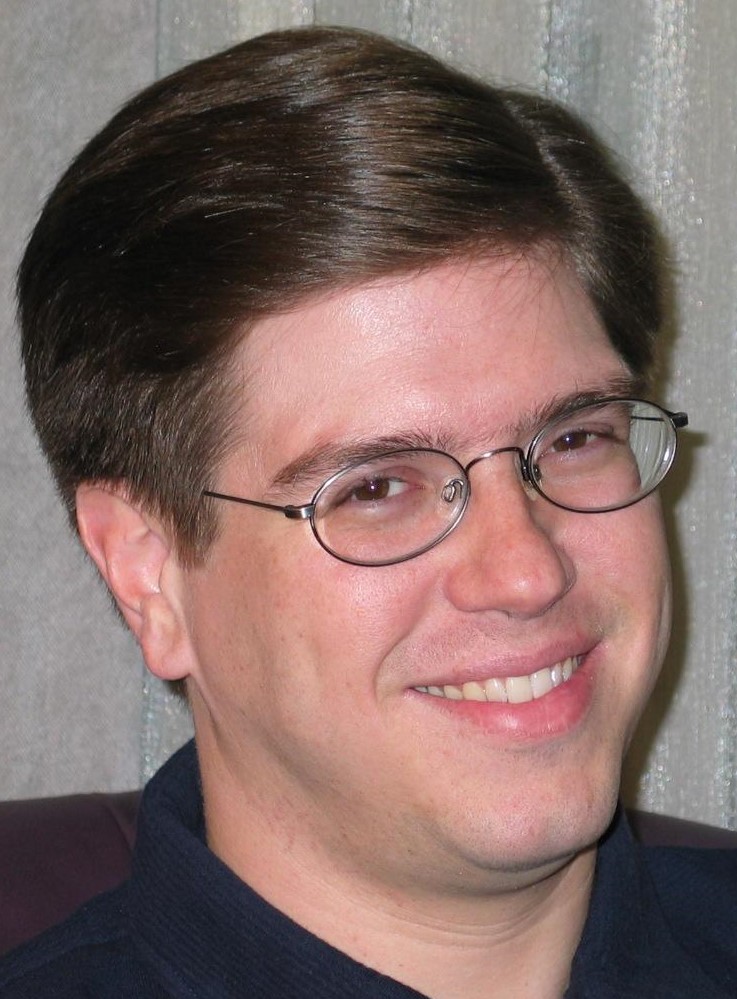
Here's a higher-resolution picture of me, as well as a
headshot.
You are welcome to use them under the
Creative Commons Attribution-ShareAlike 3.0 Unported License (CC-BY-SA),
the same license Wikipedia uses.
Public/Published articles
Most of my written work is not publicly available.
However, if I can make it publicly available, I try to host it on
my personal website,
or at least include a reference to it from my website.
See
my contact information if you want
to contact me.
Or,
see my personal home page.